
Underconnected
A co-op cooking game in the style of Overcooked
A multiplayer cooking game built in Unity, inspired by Overcooked. Created as a team project for the Game Development module at university, with a focus on cooperative play.
Technologies
- Unity
- C#
- Game development
- Local multiplayer
- 2D graphics
- Team project
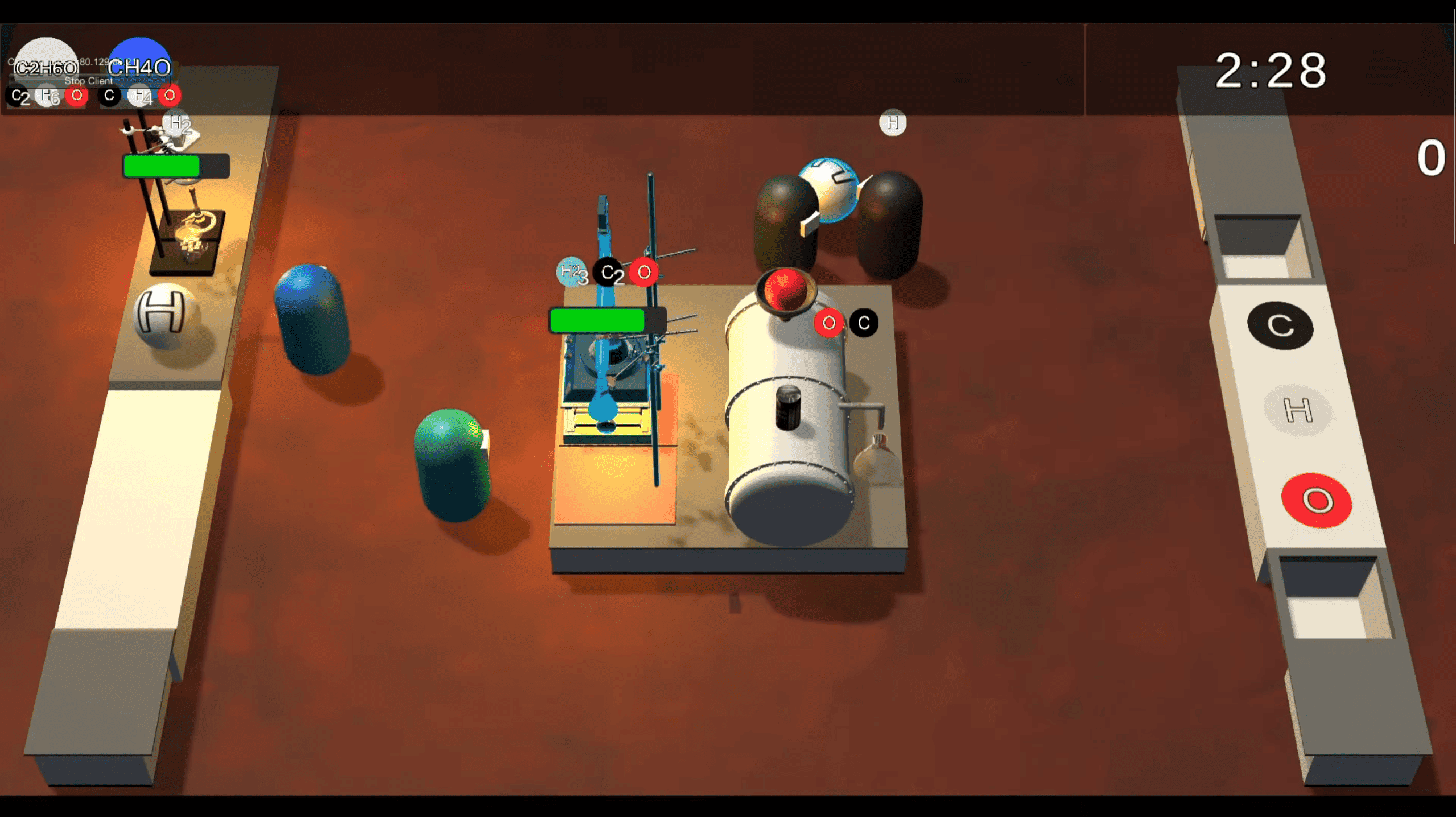
Screenshots

Level 1 
Level 2 
Level 3
Game concept
Underconnected is a co-op cooking game for up to four players that is all about teamwork and communication.
The goal is to fill orders in time: players gather ingredients, prepare them at cooking stations and serve the finished dishes. The game takes the core idea of Overcooked, adds its own elements and was built from scratch in Unity.
Game mechanics
Core mechanics:
- Local co-op multiplayer for two to four players
- Orders with a time limit
- A variety of stations, from chopping boards to ovens
- Kitchen layouts that grow more complex
Gameplay loop:
1. Take orders
2. Fetch ingredients such as tomatoes, onions or meat from the pantry areas
3. Chop, boil or fry them at the stations
4. Serve the finished dishes before time runs out
The real challenge lies in coordinating with the other players and managing time.
Stations and ingredients
Stations:
- Chopping boards for cutting vegetables and other ingredients
- Stoves and ovens for cooking and frying
- Pantry areas as an unlimited source of basic ingredients
- Serving stations for the finished dishes
Ingredients:
- Vegetables: tomatoes, onions, lettuce
- Various kinds of meat
- Preparation chain: raw → chopped → cooked → finished dish
Simple controls and clear visual feedback make the game accessible to casual players too.
Level design
The game includes several hand-crafted levels, each with its own challenges.
The first level introduces the mechanics with a simple layout and the basic stations. Later levels have more complex floor plans with more obstacles, additional stations and ingredients, and longer distances to cover, which makes communication within the team increasingly important.
Team and implementation
Developed by a team of five students:
- Alexander Pantelkin
- Christian Hollatz
- Dominik Horny
- Johannes Greising
- Ricardo Lieblein
Technology:
- Unity as the engine, with all game logic written in C#
- Local multiplayer system
- Sprite-based 2D graphics
- Modular level system that is easy to extend
What I learned
- Hands-on experience with Unity for 2D game development
- Implementing local multiplayer mechanics
- Collaboration and coordination in a team of five
- Game design fundamentals, especially balancing challenge and fun
The main technical challenges were performance with four players at once, state management for the different game states, and a user interface that stays clear with several players on screen.
For me, the project was an important step in game development with Unity and C#, and in building software as part of a team.